01How the Love Arcana Calculator Works
The Love Arcana Calculator needs one birth date, not a name or a partner's details. It adds every digit in the year, month, and day. When the sum is greater than 22, it adds the digits of that sum and repeats only while the value remains above 22. The final number maps to one Major Arcana card from 1 through 22. For example, 15/05/1990 totals 30, then 3 + 0 becomes 3: The Empress. The result panel shows the arithmetic so the card can be reproduced by hand.
The calculation is identical to the Single Arcana method on the homepage, but the reading lens is deliberately different. Here, The Empress is discussed through receiving care, expressing desire, maintaining boundaries, and avoiding overgiving. The card does not change because someone begins or ends a relationship; the questions change because the page is designed for love and relational self-knowledge. The work happens locally in the browser, and no account, email, or name is required.
02What a Love Arcana Reading Means
A love Arcana card is a symbolic prompt about how one person may approach closeness. It can supply language for needs that are easy to feel but difficult to name: reassurance, independence, candor, play, consistency, privacy, or repair. Read the card's constructive expression and its shadow together. The Chariot may describe decisive pursuit, yet its shadow can be treating connection as a goal to win. The Hermit may protect thoughtful space, yet withdrawal without explanation can leave another person guessing.
The result is not a verdict about attachment style, romantic worth, sexuality, or readiness for commitment. Broad descriptions can feel personal, so test the reading against a recent event. What did you ask for? What did you avoid saying? What did the other person actually do? A useful interpretation leads back to observable behavior and allows disagreement. If the symbolism does not fit, that is information—not a reason to reinterpret every event until the card appears correct.
This is also different from compatibility. One birth date produces one relationship lens; it does not compare two people. Use the Couple Arcana Calculator when two romantic partners want a shared qualitative reading. Use the broader Compatibility Calculator for a friend, relative, colleague, collaborator, or partner. Keeping those tools separate avoids implying that every love question needs a score or that one person's card can predict another person's choices.
03Love Themes Across the 22 Major Arcana Cards
Every card can be read through relationship behavior without reducing it to a promise of romance. The compact map below names one constructive love theme for each number. It is an orientation guide rather than a complete reading: direct desire can become pressure, quiet intimacy can become silence, and secure commitment can become control when consent or flexibility is missing. Open your calculated result for the longer interpretation, then ask which expression is supported by a real example.
Card numbering varies between traditions. This project uses Strength as 8, Justice as 11, and The Fool as birth number 22 even though The Fool is commonly printed as 0. If another tarot birth card calculator gives you a different result, compare its arithmetic and number map before comparing meanings.
- 1 · The Magiciandirect desire
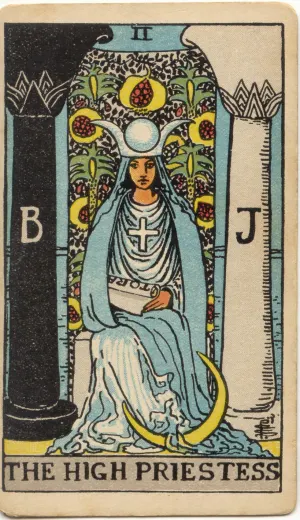
- 2 · The High Priestessquiet intimacy
- 3 · The Empressnurturing affection
- 4 · The Emperorsecure commitment
- 5 · The Hierophantshared values
- 6 · The Loversconscious choice
- 7 · The Chariotpurposeful pursuit
- 8 · Strengthpatient courage
- 9 · The Hermithealthy space
- 10 · Wheel of Fortunechanging seasons
- 11 · Justicereciprocal honesty
- 12 · The Hanged Mana useful pause
- 13 · Deathhonest transition
- 14 · Temperancesteady integration
- 15 · The Devilexamined attachment
- 16 · The Towertruthful disruption
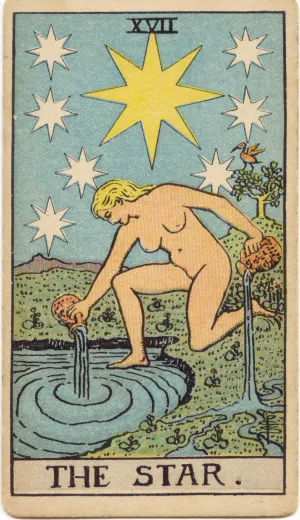
- 17 · The Starrenewed trust
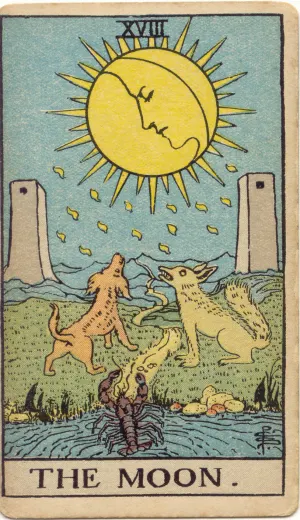
- 18 · The Moonemotional uncertainty
- 19 · The Sunopen warmth
- 20 · Judgementrelationship reckoning
- 21 · The Worldmature belonging
- 22 · The Foolopenhearted beginning
04How to Use Your Love Arcana Result
Begin with one sentence from the result and turn it into a question you could answer with evidence. Instead of “Am I The Moon in love?” ask “When did uncertainty make me assume rather than check?” Write down the scene, the words that were exchanged, and one alternative response. This keeps the archetype connected to a choice rather than turning it into a permanent romantic identity.
Next, choose a small seven-day experiment. If the theme is clarity, ask one direct question without demanding an immediate answer. If it is care, offer one specific form of help and leave room for refusal. If it is freedom, state the space you need and when you will reconnect. At the end of the week, review what happened with curiosity. The result is useful when it improves a conversation, not when it proves one person right.
If you share the result, remember that its link contains the complete birth date. Ask before sharing someone else's date, and avoid posting private information publicly. No card can identify a soulmate, guarantee attraction, predict a breakup, or establish that a person is safe. Where there is fear, coercion, stalking, or harm, prioritize qualified support and real-world safety over symbolic interpretation.
05Love Card, Couple Reading, or Compatibility?
Choose this page when the question begins with “How do I tend to approach love?” It uses one date and gives one person's relational reflection. Choose the Couple tool when two romantic partners want to place their cards side by side and discuss affection, friction, and repair. Choose Compatibility when the relationship might be friendship, family, teamwork, creative partnership, or romance and a transparent symbolic index would be useful.
These tools share a published number system, but they do not make interchangeable claims. A one-person love card cannot assess a partner. A two-person result cannot measure trust, consent, communication skill, or relationship quality. Start with the narrowest tool that matches the question, read both the helpful and difficult expressions, and finish with something observable that the people involved can discuss freely.